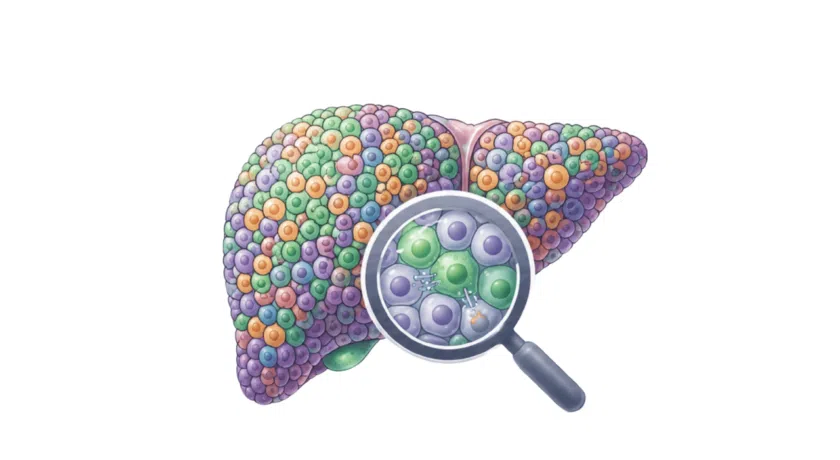
Established cell types
These are the most straightforward to identify, typically through reference datasets. Some cells have distinct markers (e.g., PFN1 for osteocytes, PECAM1 for endothelial cells), while others require broader gene set enrichment to match known profiles.
Novel cell types
New cell types are rarely identified, but when clusters are biologically distinct—based on function or developmental origin—they may represent something novel. In such cases, differential expression guides discovery, which can be followed by functional validation.
Cell states and disease stages
Cells can change state in response to perturbation. scRNA-seq can detect these transitions, with tools like enrichment or co-expression analysis helping to identify patterns tied to activation, stress, or pathology.
Developmental stages
In developmental contexts, scRNA-seq can reveal progression from progenitor to mature cell types. Trajectory and pseudotime analyses help reconstruct these paths, supporting both annotation and biological insight.

Assigning Cell Type Identities
Practical steps of cell type identification vary depending on the research question and the data. In general, our approach can be streamlined as follows:
-
In-depth preprocessing – including quality control, batch effect correction, and clustering analysis.
-
Reference-based annotation – mapping clusters to known cell types using established datasets.
-
Manual refinement – fine-tuning labels through expert curation of marker genes and biological context.
In-depth Preprocessing
High-quality data is the foundation of reliable cell annotation. We start with rigorous quality control to filter out low-quality cells or genes, followed by doublet detection to exclude multiplets from further analysis. Next, batch correction is applied to mitigate technical variation from differences in sample preparation or sequencing runs.
Finally, we perform a preliminary clustering analysis aimed at grouping cells with similar transcriptomic profiles, offering the first structural view of the dataset and laying the groundwork for accurate annotation.
Reference-based Annotation
In this step, we conduct an in-depth review of the literature and available cell atlases to identify the most suitable reference datasets, which serve as a ground truth for a first preliminary annotation. Clients are also welcome to specify any particular study or atlas they prefer for referencing their data.
We then align the gene expression profiles of each single cell with references from similar tissues, with tools such as SingleR or Azimuth. Notably, the Azimuth project provides cell type annotations at different levels—from broad categories to very detailed subtypes—so you can choose the level of detail that best fits your needs.
Following reference-based annotation, we check how the predicted cell types align with our clusters. If the reference indicates that two clusters represent the same cell type, we merge them. If it points to finer differences, we adjust the resolution to capture those subtypes. When possible, multiple reference datasets are used at this stage, allowing for the generation of a robust consensus annotation.
While this iterative refinement is time-consuming, the integration of reference-based annotation tools within popular single-cell analysis platforms like Seurat ensures a streamlined and efficient workflow.
Manual Refinement
This step adds a crucial layer of biological insight. Automated methods may miss subtle distinctions or misclassify cells in edge cases.
To address this, we carefully review the preliminary annotations against multiple sources of evidence. This includes verifying expression patterns of canonical marker genes, performing differential gene expression analyses to detect unique or unexpected signatures, and consulting relevant literature to contextualize findings. Most importantly, we integrate the client’s biological expertise, which is often essential for interpreting ambiguous clusters or edge cases.
Manual refinement not only corrects potential misclassifications but also allows for more precise labeling—such as distinguishing between closely related cell subtypes, identifying transitional cell states, or flagging novel populations for further investigation. This ensures that the final cell type assignments accurately reflect the true biological context of the study, ultimately leading to more robust interpretations and enabling discoveries that might otherwise remain hidden.

Concluding Remarks
Robust cell type identification depends on several key factors: the quality of your data, the availability of suitable reference studies, and the validity of the chosen marker genes or gene sets. In practice, we combine our computational expertise with the biological knowledge of our clients to ensure that annotations are both technically sound and biologically meaningful.
It’s important to stress that the best practice is to follow up scRNA-seq experiments with validation experiments of another nature to further characterize the cells in your sample. Likewise, it can be vital to find out whether the newly identified cell types represent a stable cell type or a transient molecular state. In our data consulting projects, clients play a central role by delivering important cell markers, potential reference, and, in general, their biological expertise, helping define the final identity of each cluster based on our analysis output.
For more details on our approach, explore our full data analysis methodology here or contact our data experts by emailing data_consulting@scdiscoveries.com.