Toxicology studies the effects of chemical compounds on biological systems and evaluates their safety. It plays a central role in drug development, environmental testing, and consumer product evaluation. Traditional toxicity assays typically rely on endpoints such as cell death, growth inhibition, or morphological changes. While these approaches provide valuable information, they mainly capture late or visible effects. As a result, early or subtle molecular changes that precede measurable toxicity may be overlooked, and important biological signals can remain undetected during initial screening phases. Transcriptomics introduces an additional layer of analysis by capturing gene expression changes across the entire transcriptome.
This approach enables the detection of cellular responses before phenotypic effects become apparent. In this context, high-throughput methods such as DRUG-seq have emerged as powerful tools for studying compound-induced perturbations at scale.

Why Transcriptomics Is Becoming Important in Toxicology
The integration of transcriptomics into toxicology has shifted the field toward a more detailed understanding of compound effects. Instead of focusing only on observable outcomes, researchers can investigate how biological pathways respond to chemical exposure at the molecular level.
Transcriptomic data enables the analysis of pathway perturbations, helping identify which cellular processes are affected by a compound. It also supports dose–response studies, allowing researchers to distinguish adaptive cellular responses from potentially harmful ones.
Transcriptomics additionally facilitates mechanism-of-action analysis by grouping compounds based on shared biological responses rather than solely on phenotypic similarities. This can improve compound classification and support earlier decision-making during drug development.
In addition, gene-expression profiling contributes to biomarker discovery and the identification of toxicity-associated signatures. These signatures can be linked to adverse outcome pathways, supporting more predictive and biologically relevant risk assessment strategies.
Interested in applying transcriptomics to toxicology studies?
Learn how DRUG-seq reveals dose-dependent gene-expression changes and biologically relevant perturbations that may not be detected through viability or imaging-based assays.
What Is DRUG-seq and How Does It Work?
DRUG-seq is a high-throughput bulk 3’ RNA sequencing-based method designed to profile gene-expression changes across large numbers of compounds, concentrations, or experimental conditions. It enables scalable and cost-efficient transcriptomic analysis, making it particularly suitable for compound and toxicity screening applications.
In a typical DRUG-seq workflow, cells are cultured in multiwell plates and exposed to different compounds or perturbations under controlled conditions. After treatment, cells are lysed and prepared for RNA sequencing. During library preparation, samples are uniquely barcoded, enabling the pooling and parallel processing of hundreds of conditions in a single sequencing run. The pooled libraries are then sequenced using next-generation sequencing (NGS) to generate gene-expression profiles for each condition. Downstream analysis can then identify drug-induced transcriptional changes, construct gene expression signatures, and group compounds based on shared biological responses or functional effects.
This combination of scalability, comparative analysis, and transcriptomic profiling helps researchers feel optimistic about advancing safety testing and decision-making.
How DRUG-seq Improves Toxicology and Risk Assessment
DRUG-seq improves toxicology studies by enabling the parallel comparison of molecular responses across many compounds, doses, and experimental conditions. This supports more efficient high-throughput screening workflows and increases the amount of biological information obtained from each experiment.
By combining scalable processing workflows with transcriptomic readouts, DRUG-seq bridges the gap between traditional toxicity screening and systems-level biological interpretation. Instead of relying solely on binary classification of compounds as toxic or non-toxic, researchers can investigate how cellular systems respond to molecular perturbations. For example, two compounds may produce similar effects on viability while activating different stress, inflammatory, or metabolic pathways. Gene-expression profiling can help distinguish these responses at an earlier stage, providing additional insight into compound safety and mechanism of action.
Unlike targeted assays, DRUG-seq captures an unbiased view of gene expression. This allows the identification of both expected and unexpected biological responses, including off-target effects that may not be detected through conventional toxicity assays.
Another advantage is the ability to detect gene-expression changes before visible toxicity occurs. This can make risk assessment more sensitive and efficient by helping identify potentially harmful compounds at earlier stages of development and supporting faster prioritization decisions.
Additional applications include environmental and chemical testing, cosmetics and consumer product safety, agrochemical testing, and advanced in vitro systems such as organoids or cell-based models. In these contexts, DRUG-seq enables more comprehensive and scalable analysis than traditional toxicity assays alone.

Comparison between traditional toxicity assays and DRUG-seq-based transcriptomic profiling in toxicological risk assessment. Traditional readouts mainly rely on phenotypic endpoints such as viability and morphology. In contrast, DRUG-seq enables transcriptome-wide analysis, earlier detection of molecular perturbations, mechanism-of-action analysis, and scalable high-throughput screening.
DRUG-seq at Single Cell Discoveries
At Single Cell Discoveries, DRUG-seq is available through the Discovery-seq workflow. Although based on the same core principles, Discovery-seq uses linear amplification through in vitro transcription rather than PCR amplification. This approach improves the detection of low-abundance transcripts while reducing amplification-related bias.
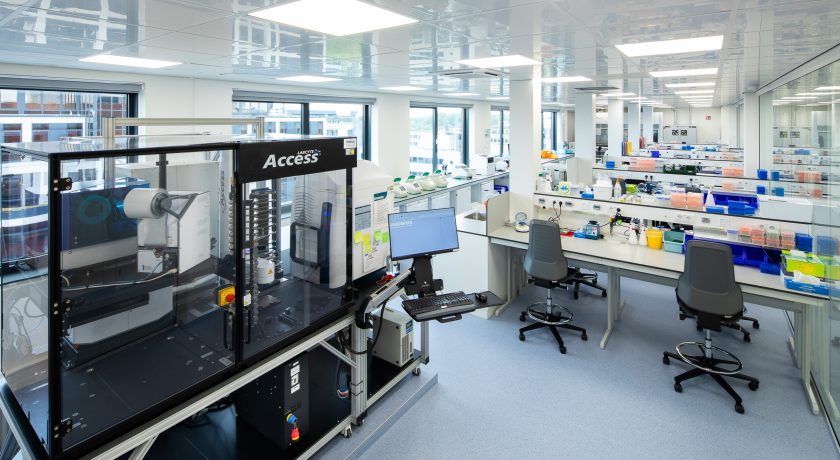
Discovery-seq provides a scalable and automated solution for processing large numbers of samples, experimental conditions, or dose points in parallel. This makes it well-suited for applications such as compound screening, dose–response studies, functional genomics, toxicogenomics, and toxicology research.
This workflow is offered as a fully supported service that integrates high-throughput screening, sequencing, and downstream data analysis into a streamlined pipeline. By generating transcriptome-wide insights across multiple experimental conditions, it supports data-driven decision-making in drug discovery, drug safety assessment, and toxicological risk assessment.
Looking to better understand compound mechanisms of action in complex models?
Learn how DRUG-seq supports high-throughput screening and transcriptomic profiling of organoids to identify molecular perturbations and drug-response signatures that conventional assays may miss.
Conclusion
Toxicology is evolving toward approaches that are more mechanistic, scalable, and data-rich. Transcriptomics plays a key role in this transition by enabling the analysis of molecular responses to chemical exposure.
DRUG-seq and related methods provide the tools needed to move beyond simple toxicity endpoints and toward a deeper understanding of how and why cells respond. As toxicology increasingly adopts mechanism-driven and high-throughput approaches, scalable transcriptomic methods such as DRUG-seq are becoming important tools for modern safety assessment, compound screening, and predictive risk assessment.
Contact the SCD team to design a DRUG-seq experiment tailored to toxicology and risk assessment studies. Cell culture plates can be sent directly to the team without additional kits or reagents, and the workflow is adapted to the specific experimental setup and screening design. Discuss the project and explore the optimal DRUG-seq strategy during a free 30-minute consultation with SCD experts.
Information Guide Discovery-seq
Discover our Discovery-seq service
Download our information guide to access an overview of Single Cell Discoveries, explore our Discovery-seq service, learn how to get started, and gain more valuable insights.