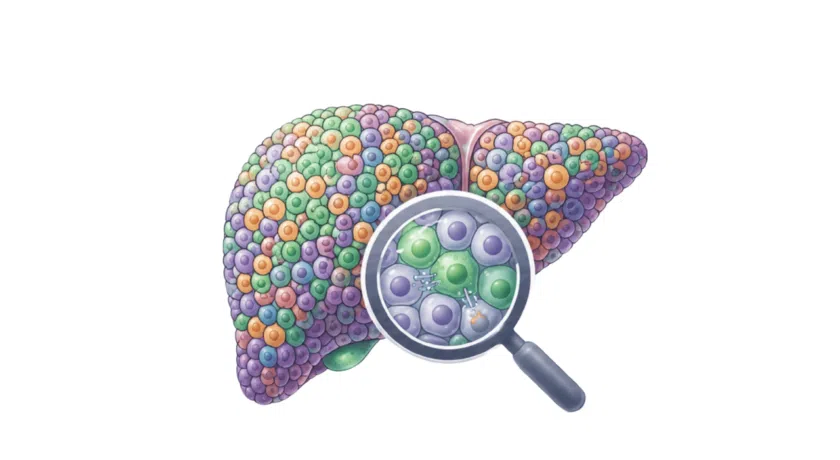
Different transcriptomics methods offer different levels of detail, cost, and usefulness depending on the type of sample and the research question. Transcriptomics refers to the study of gene expression by analyzing the RNA transcripts produced in a cell or tissue. The main approaches, Bulk RNA sequencing (Bulk-seq), single-cell RNA sequencing (scRNA-seq), and spatial transcriptomics, each provide unique advantages based on the complexity of the sample and the type of information required.
At Single Cell Discoveries (SCD), transcriptomics projects are planned in collaboration with researchers to ensure that the chosen method aligns with the scientific goals, available samples, and budget.
This blog article outlines when each method is most appropriate and when combining scRNA-seq and spatial transcriptomics may offer added value.

Jump to a section in this blog:
Bulk Transcriptome Sequencing: Reliable and Cost-Effective
Bulk RNA sequencing measures the average gene expression across all the cells in a sample. RNA is extracted from the entire group of cells, and the data reflects overall gene activity. This method is robust, scalable, and cost-effective, making it suitable for homogeneous samples or studies where detailed information on individual cells is not required. It is widely used in basic research, drug screening, and as a preliminary assessment before moving to higher-resolution approaches.
Best suited for:
- Initial transcriptome profiling between samples
- Cultured clonal cell lines; enriched or sorted cell subsets
- Budget-constrained studies
When not ideal:
- Heterogeneous tissues composed of multiple cell types
- Projects aiming to identify rare or novel cell states
Considerations:
- Cannot resolve gene expression differences between individual cells
Rare cell types may be missed due to population averaging
Examples of Bulk-seq methods used at SCD include Discovery-seq and Total Bulk-seq.
Single-Cell RNA Sequencing: High Resolution, High Discovery Potential
Single-cell RNA sequencing is ideal for studying heterogeneous tissues. It measures gene expression at the level of individual cells by isolating, barcoding, and sequencing each cell or nucleus separately. This approach provides detailed per-cell gene expression data, supports comparisons between cell types, and estimates their proportions. It can also detect rare or short-lived cell states that may be missed by bulk or spatial methods. Pseudotime analysis can be used to study how cells develop or change over time. scRNA-seq is widely applied in immunology, oncology, regenerative medicine, and systems biology.
Best suited for:
- Heterogeneous tissues (e.g., immune system, tumors)
- Quantitative gene expression profiling per cell
- Discovery of novel or rare cell types and states
- Tracking cell development or activation over time
When not ideal:
- Studies where spatial context is required
- Difficult-to-dissociate tissues (e.g., bone, brain)
- Homogeneous samples (e.g., clonal cell cultures)
Considerations:
- Higher reagent and sequencing costs
- Requires viable single-cell or single-nucleus suspensions
- Demands advanced bioinformatics and computing resources
At SCD, scRNA-seq methods and technologies include SORT-seq for analyzing sorted cells, VASA-seq for profiling total RNA, and platforms such as 10x Genomics, scrna, and Parse Biosciences.
Get the 10x Genomics
information guide
You can find a full explanation of 10x Genomics, its variations, and our approach in our information guide.
Spatial Transcriptomics: Gene Expression in Context
Spatial transcriptomics preserves tissue structure while measuring gene expression. Transcripts are captured from intact tissue sections, and their spatial coordinates are retained, allowing researchers to see where genes are active within the tissue. This method is especially useful when tissue architecture influences biological interpretation.
In addition to mapping gene expression, spatial transcriptomics helps visualize how cells interact in their native environment. This can reveal how cell types are organized, how they communicate, and how gene activity is distributed across tissue regions.
Best suited for:
- Tissues that are difficult to dissociate (e.g., bone, brain)
- Brain research, developmental biology, or cancer studies
- Studying the tumor microenvironment
- Identifying how cells are spatially organized
- Post-scRNA-seq validation and mapping
When not ideal:
- Samples with technical challenges (e.g. fibrotic or calcified tissue samples)
- Projects that require high-resolution, per-cell quantification of gene expression
Considerations:
- Resolution is platform-dependent and may not have single-cell resolution
- Requires well-preserved fresh-frozen, fixed-frozen or FFPE tissue sections
- Lack of pathology expertise to select optimal sections may affect data quality
- Involves steps such as image alignment and complex data analysis
- Probe-based spatial methods may depend on prior scRNA-seq data
Spatial transcriptomics at SCD is performed using Visium HD by 10x Genomics to capture whole-transcriptome gene expression at single-cell resolution.
Watch our webinar on spatial profiling of drug-tolerant cells in colorectal cancer models with Visium HD
Single-cell spatial insights using Visium HD
Combining Single-Cell and Spatial Transcriptomics
The combination of scRNA-seq with spatial transcriptomics provides a comprehensive view of gene expression and tissue organization. scRNA-seq provides high-resolution molecular profiles for individual cells, whereas spatial methods preserve the physical location of transcripts within intact tissue. Together, these methods enable exploration of how cellular identity and spatial arrangement influence biological processes.
For example, Single Cell Discoveries offers Visium HD from 10x Genomics to map whole transcriptome profiles within tissue. The probe-based chemistry is shared with the Gene Expression Flex technology, allowing FFPE single-cell workflows to be combined with the spatial profiling and refine the identification of distinct cell types.
This integrated approach is particularly valuable in cancer, neuroscience, and developmental biology—areas where spatial gradients, cellular interactions, and tissue architecture play critical roles.
Best suited for:
- Studies requiring both spatial and molecular resolution
- Mapping differentiation processes across space and time
- Creating long-term reference maps or atlases
- Localizing rare cell populations identified through scRNA-seq
When not ideal:
- Budget or internal resources are limited
- Only one assay can be performed due to limited sample availability
Considerations:
- Higher cost and complexity in experimental design
- Requires coordinated sample preparation and sequencing
- Requires advanced data integration techniques and software

Choosing the Right Method: Support from SCD
Transcriptomics method selection depends on multiple factors, including tissue type, sample preparation feasibility, desired resolution, and budget. SCD supports the design of tailored workflows for Bulk-seq, scRNA-seq, spatial transcriptomics, or integrated approaches.
Our available support includes:
- Technical expertise across all transcriptomics methods
- Sample preparation guidance and tissue handling protocols
- Scalable project design with integrated analysis and reporting
- Each project is individually evaluated to ensure the chosen method yields meaningful biological insights.
Contact our team to discuss your research goals and explore the best transcriptomics strategy for your study.